Buy patriziaspadafora.eu ?
We are moving the project
patriziaspadafora.eu .
Are you interested in purchasing the domain
patriziaspadafora.eu ?
domain@kv-gmbh.de · 0541-91531010
Buy patriziaspadafora.eu ?
Is a sharpening stone the same as a sharpening stone, or are there qualitative differences?
A sharpening stone is not the same as a sharpening stone. There are qualitative differences between different types of sharpening stones. For example, some sharpening stones are made from natural materials like Arkansas stone or Japanese water stones, while others are made from synthetic materials like aluminum oxide or silicon carbide. The grit size and hardness of the stone can also vary, affecting the sharpening process and the quality of the edge produced. It's important to consider these differences when choosing a sharpening stone for a specific type of blade or tool. **
Which sharpening stone for kitchen knives?
When choosing a sharpening stone for kitchen knives, it is important to consider the material of the knife blade. For softer steel blades, a coarse grit stone (around 1000 grit) is recommended to remove more material and reshape the edge. For harder steel blades, a finer grit stone (around 3000-6000 grit) is better for honing and polishing the edge. Additionally, a combination stone with both coarse and fine grit sides can be a versatile option for maintaining different types of kitchen knives. **
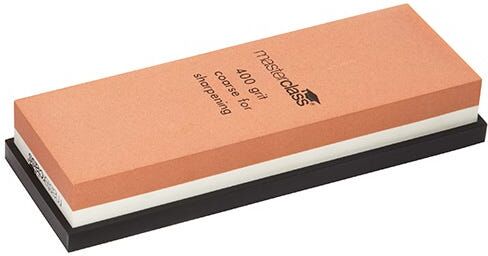

Similar search terms for MasterClass-Combination-Sharpening-Stone
Top-Angebote
Products related to MasterClass-Combination-Sharpening-Stone:
-
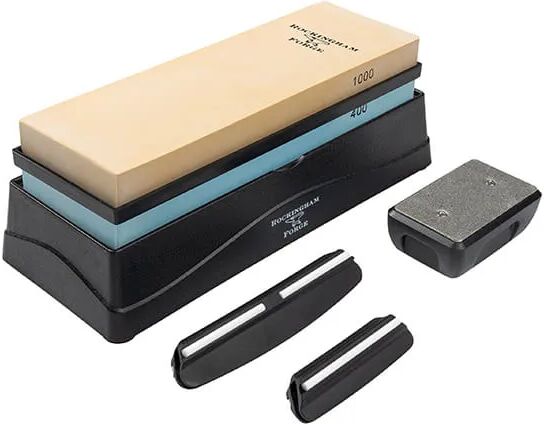
Rio Rockingham Forge Combination (Coarse/Medium) Sharpening KitThis Rockingham Forge sharpening kit includes a 400 and 1000 grit ceramic sharpening whetstone. The set also includes a protective box with breathing holes to protect the whetstones and aid drying. The kit also includes a flattening stone for keeping your whetstone flat and prevents dipping of the surface after repeated use. Also included are two angle guides for both smaller and larger knives to enable the perfect sharpening angle.30,00 £*Shipping: 3,50 £Secure redirect to the provider
-
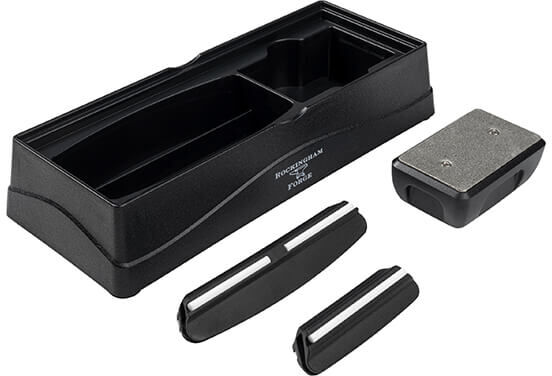
Rio Rockingham Forge Sharpening Kit Without StoneThis Rockingham Forge sharpening kit includes a protective box with breathing holes to protect whetstones and aid drying. The kit also includes a flattening stone for keeping your whetstone flat and prevents dipping of the surface after repeated use. Also included are two angle guides for both smaller and larger knives to enable the perfect sharpening angle.16,88 £*Shipping: 3,50 £Secure redirect to the provider
-
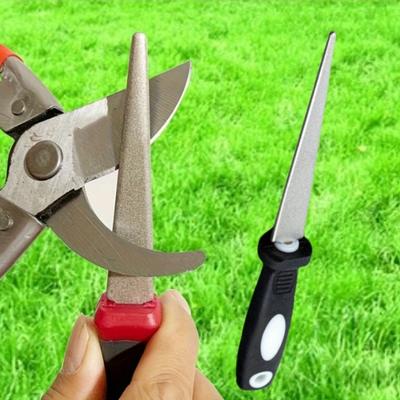
Combo Retail Shop Diamond Sharpening Stone, Double Sided Flat And Curved Design, Easy To Grip Handle With One Stone Two Birds Diamond Sharpening Stone, Double Sided Flat And Curved Design, Easy To Grip Handle With One Stone Two BirdsUpgrade your sharpening routine with this premium diamond sharpening stone crafted for precision, speed, and comfort. This quality tool features a double sided flat and curved design that adapts to different blade shapes and edges, while the easy to...33,97 $*Shipping: 0,00 $Secure redirect to the provider
-
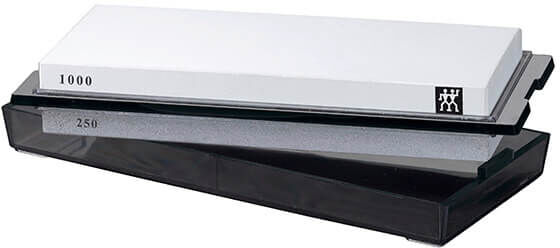
Zwilling J A Henckels 250/1000 Twin Sharpening stoneThe Zwilling J A Henckels Twin Stone Pro Sharpening Stone is a must-have for maintaining the razor-sharp edge of your knives. As knives inevitably lose their sharpness through regular use, this practical Zwilling sharpening stone becomes indispensable. With dimensions of 20cm x 8.5cm and a thickness of 4cm, it provides the ideal surface for revitalising dulled blades, whether they have serrated edges or not. Designed for efficiency, one side of the stone features a coarser grain (250) for preliminary honing, while the finer side (1,000 grain) ensures a smooth, polished finish for your blade. Become a knife-sharpening expert effortlessly by gliding your knife blade over this convenient stone a few times. Your favourite knives will be restored to their precision-cutting glory, effortlessly slicing through vegetables, herbs, salads, meat, poultry, and fish.59,95 £*Shipping: 0,00 £Secure redirect to the provider
-
How can you roughen a sharpening stone?
You can roughen a sharpening stone by using a coarse grit sandpaper to create a new abrasive surface. Simply rub the sandpaper against the stone in a circular motion until the surface becomes rough and textured. This will help to remove any glazing or clogging on the stone, allowing it to effectively sharpen blades and tools. Be sure to clean the stone thoroughly after roughening to remove any debris before use. **
-
How do I clean a sharpening stone after mold infestation?
To clean a sharpening stone after mold infestation, you can start by scrubbing the affected areas with a mixture of warm water and mild dish soap. Use a brush or sponge to gently scrub away the mold. Rinse the stone thoroughly with clean water and allow it to air dry completely. To prevent future mold growth, store the sharpening stone in a dry and well-ventilated area. **
-
How do I sharpen a sickle with a sharpening stone?
To sharpen a sickle with a sharpening stone, first, secure the sickle in a vise or hold it firmly in one hand. Then, hold the sharpening stone at a 20-degree angle to the blade and stroke it along the edge of the sickle in a smooth, consistent motion. Repeat this process on the other side of the blade until the edge is sharp. Finally, remove any burrs by gently stroking the sharpening stone along the edge of the sickle. **
-
Is emerald suitable as a sharpening stone for knives? See details.
Emerald is not suitable as a sharpening stone for knives. While emeralds are a hard and durable gemstone, they are not abrasive enough to effectively sharpen knife blades. Sharpening stones need to be made of materials like silicon carbide, aluminum oxide, or diamond to effectively sharpen knives by removing metal from the blade. Using emerald as a sharpening stone would likely not produce the desired sharpness and could potentially damage the knife blade. **

How do I sharpen a survival knife with a sharpening stone?
To sharpen a survival knife with a sharpening stone, start by placing the stone on a stable surface with the coarse side facing up. Hold the knife at a 20-degree angle to the stone and move it in a circular motion, applying light pressure. Repeat this process on both sides of the blade until you have achieved the desired sharpness. Then, flip the stone over to the fine side and repeat the process to hone the blade. Finally, test the sharpness of the knife by cutting through a piece of paper or a small piece of wood. **
How often should one sharpen a knife with a sharpening stone?
It depends on how often the knife is used, but generally, a knife should be sharpened with a sharpening stone every 2-3 months with regular use. However, if the knife is used heavily or becomes dull quickly, it may need to be sharpened more frequently. It's important to regularly check the sharpness of the knife and sharpen it as needed to maintain its effectiveness and safety. **
Top-Angebote
Products related to MasterClass-Combination-Sharpening-Stone:
-
MasterClass Combination Sharpening StoneMasterClass sharpening stone with a two piece precision sharpening 400/1000 combination grit for enhanced performance. The firm but porous structure of the stone continuously releases small particles during the sharpening process that when combined with water are responsible for sharpening the knife blade. Features a non-slip base stand that ensures the stone stays stable while in use.Size: 18cm (7)25,96 £*Shipping: 3,50 £Secure redirect to the provider
-
Global MinoSharp Sharpening Kit With Combination Stone Rough / MediumMinosharp Sharpening Kit With Combination Stone Rough / Medium is complete with holder and guide rails. Grade: Rough / Medium Grit: 240 / 1000 Mino Sharp Whetstones - Global knives come out of the factory in Japan with a very sharp edge and CROMOVA 18, Globals unique blade material, ensures that this sharpness will be maintained longer than most other knives. However, Global knives need to be sharpened from time to time to maintain their keen edge. Each tool is different and may be easy or difficult to use depending on the individual and their level of experience or skill. Global recommends periodically sharpening your knives using a MinoSharp waterstone. In between stone sharpenings, it is recommended that you use the Global fine ceramic or diamond rod to keep the edges of your knives aligned. (Global serrated knives do not need to be sharpened) There are various types of waterstones stones available and normally a medium grit stone is sufficient to start with. However, if the blade is blunt or damaged, it may be necessary to start with rough grit. A waterstone must be placed in water and allowed to soak for 10-15 minutes to allow it to absorb sufficient moisture. Regardless of the size or type of stone you are using, the procedures for sharpening are as follows: 1. The stone should be soaked for the required amount of time before use.2. Hold the knife so that the blade meets the stone at a 10-15 degree angle, then push back and forth across the stone in smooth steady strokes maintaining the same angle.3. Repeat the stage above on both sides of the blade going from one side to the other until your knife is sharp and there are no burrs on either side.4. During sharpening a certain amount of wet powder will appear, but do not wash or wipe this residue and continue sharpening.5. After sharpening, your knives should be washed in hot water and then towel dried. To aid in achieving the correct angle use sharpening guard rails.89,95 £*Shipping: 0,00 £Secure redirect to the provider
-
Rio Rockingham Forge Combination (Coarse/Medium) Sharpening KitThis Rockingham Forge sharpening kit includes a 400 and 1000 grit ceramic sharpening whetstone. The set also includes a protective box with breathing holes to protect the whetstones and aid drying. The kit also includes a flattening stone for keeping your whetstone flat and prevents dipping of the surface after repeated use. Also included are two angle guides for both smaller and larger knives to enable the perfect sharpening angle.30,00 £*Shipping: 3,50 £Secure redirect to the provider
-
Rio Rockingham Forge Sharpening Kit Without StoneThis Rockingham Forge sharpening kit includes a protective box with breathing holes to protect whetstones and aid drying. The kit also includes a flattening stone for keeping your whetstone flat and prevents dipping of the surface after repeated use. Also included are two angle guides for both smaller and larger knives to enable the perfect sharpening angle.16,88 £*Shipping: 3,50 £Secure redirect to the provider
-
Is a sharpening stone the same as a sharpening stone, or are there qualitative differences?
A sharpening stone is not the same as a sharpening stone. There are qualitative differences between different types of sharpening stones. For example, some sharpening stones are made from natural materials like Arkansas stone or Japanese water stones, while others are made from synthetic materials like aluminum oxide or silicon carbide. The grit size and hardness of the stone can also vary, affecting the sharpening process and the quality of the edge produced. It's important to consider these differences when choosing a sharpening stone for a specific type of blade or tool. **
-
Which sharpening stone for kitchen knives?
When choosing a sharpening stone for kitchen knives, it is important to consider the material of the knife blade. For softer steel blades, a coarse grit stone (around 1000 grit) is recommended to remove more material and reshape the edge. For harder steel blades, a finer grit stone (around 3000-6000 grit) is better for honing and polishing the edge. Additionally, a combination stone with both coarse and fine grit sides can be a versatile option for maintaining different types of kitchen knives. **
-
How can you roughen a sharpening stone?
You can roughen a sharpening stone by using a coarse grit sandpaper to create a new abrasive surface. Simply rub the sandpaper against the stone in a circular motion until the surface becomes rough and textured. This will help to remove any glazing or clogging on the stone, allowing it to effectively sharpen blades and tools. Be sure to clean the stone thoroughly after roughening to remove any debris before use. **
-
How do I clean a sharpening stone after mold infestation?
To clean a sharpening stone after mold infestation, you can start by scrubbing the affected areas with a mixture of warm water and mild dish soap. Use a brush or sponge to gently scrub away the mold. Rinse the stone thoroughly with clean water and allow it to air dry completely. To prevent future mold growth, store the sharpening stone in a dry and well-ventilated area. **
Similar search terms for MasterClass-Combination-Sharpening-Stone
-
Combo Retail Shop Diamond Sharpening Stone, Double Sided Flat And Curved Design, Easy To Grip Handle With One Stone Two Birds Diamond Sharpening Stone, Double Sided Flat And Curved Design, Easy To Grip Handle With One Stone Two BirdsUpgrade your sharpening routine with this premium diamond sharpening stone crafted for precision, speed, and comfort. This quality tool features a double sided flat and curved design that adapts to different blade shapes and edges, while the easy to...33,97 $*Shipping: 0,00 $Secure redirect to the provider
-
Zwilling J A Henckels 250/1000 Twin Sharpening stoneThe Zwilling J A Henckels Twin Stone Pro Sharpening Stone is a must-have for maintaining the razor-sharp edge of your knives. As knives inevitably lose their sharpness through regular use, this practical Zwilling sharpening stone becomes indispensable. With dimensions of 20cm x 8.5cm and a thickness of 4cm, it provides the ideal surface for revitalising dulled blades, whether they have serrated edges or not. Designed for efficiency, one side of the stone features a coarser grain (250) for preliminary honing, while the finer side (1,000 grain) ensures a smooth, polished finish for your blade. Become a knife-sharpening expert effortlessly by gliding your knife blade over this convenient stone a few times. Your favourite knives will be restored to their precision-cutting glory, effortlessly slicing through vegetables, herbs, salads, meat, poultry, and fish.59,95 £*Shipping: 0,00 £Secure redirect to the provider
-
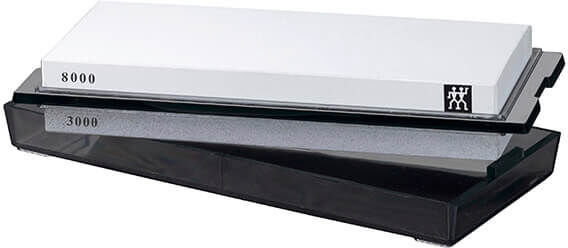
Zwilling J A Henckels 3000/8000 Twin Sharpening stoneElevate your knife sharpening routine with the Zwilling J A Henckels Twin Finishing Stone Pro Sharpening Stone. Specifically crafted for knives with a decent baseline sharpness, this tool is perfect for fine honing to achieve optimal sharpness. The twin stone features two sides with varying degrees of roughness, measured on the Japanese JIS scale – one side at 3,000 and the other at 8,000. This dual-grit design ensures precision sharpening and smoothing, resulting in an impeccably sharp, mirror-polished edge. The Zwilling sharpening stone's compact dimensions of 20cm x 8.5cm and a thickness of 4.2cm make it a convenient and effective choice, promising prolonged enjoyment of your knives. Sharpen with confidence for lasting cutting performance.89,25 £*Shipping: 0,00 £Secure redirect to the provider
-
PRiME Cook Knife Sharpening Stone 2 Side Grit 1000/3000? SUPERIOR BUNDLE : Your complete knife sharpening kit comes with double sided (#1000/ #3000) premium quality whetstone, bamboo base for holding the stone, knife sharpening angle guide. ?28,84 $*Shipping: 0,00 $Secure redirect to the provider
-
How do I sharpen a sickle with a sharpening stone?
To sharpen a sickle with a sharpening stone, first, secure the sickle in a vise or hold it firmly in one hand. Then, hold the sharpening stone at a 20-degree angle to the blade and stroke it along the edge of the sickle in a smooth, consistent motion. Repeat this process on the other side of the blade until the edge is sharp. Finally, remove any burrs by gently stroking the sharpening stone along the edge of the sickle. **
-
Is emerald suitable as a sharpening stone for knives? See details.
Emerald is not suitable as a sharpening stone for knives. While emeralds are a hard and durable gemstone, they are not abrasive enough to effectively sharpen knife blades. Sharpening stones need to be made of materials like silicon carbide, aluminum oxide, or diamond to effectively sharpen knives by removing metal from the blade. Using emerald as a sharpening stone would likely not produce the desired sharpness and could potentially damage the knife blade. **
-
How do I sharpen a survival knife with a sharpening stone?
To sharpen a survival knife with a sharpening stone, start by placing the stone on a stable surface with the coarse side facing up. Hold the knife at a 20-degree angle to the stone and move it in a circular motion, applying light pressure. Repeat this process on both sides of the blade until you have achieved the desired sharpness. Then, flip the stone over to the fine side and repeat the process to hone the blade. Finally, test the sharpness of the knife by cutting through a piece of paper or a small piece of wood. **
-
How often should one sharpen a knife with a sharpening stone?
It depends on how often the knife is used, but generally, a knife should be sharpened with a sharpening stone every 2-3 months with regular use. However, if the knife is used heavily or becomes dull quickly, it may need to be sharpened more frequently. It's important to regularly check the sharpness of the knife and sharpen it as needed to maintain its effectiveness and safety. **
* All prices are inclusive of VAT and, if applicable, plus shipping costs. The offer information is based on the details provided by the respective shop and is updated through automated processes. Real-time updates do not occur, so deviations can occur in individual cases. ** Note: Parts of this content were created by AI.